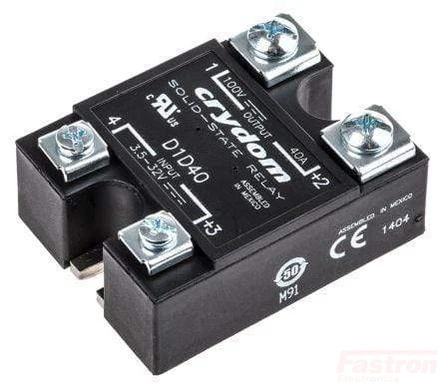
A Solid State Relay is an electronic switching device that uses semiconductor components instead of mechanical contacts to control electrical circuits. Unlike traditional relays, a Solid State Relay operates silently and provides faster switching, longer lifespan, and improved reliability. Because there are no moving parts, it significantly reduces wear and tear, making it ideal for applications that require frequent switching and high durability.
These relays are widely used in industrial automation, temperature control systems, HVAC equipment, lighting systems, and manufacturing machinery. A Solid State Relay works by using an input control signal to activate an internal electronic circuit, which then switches the load on or off. This technology ensures smooth and consistent performance without the mechanical limitations of conventional relays.
One of the major advantages of a Solid State Relay is its ability to handle high-speed switching operations while maintaining stable performance. It also provides better electrical isolation between control and load circuits, which improves overall system safety. Additionally, solid state relays generate minimal noise and vibration, making them suitable for sensitive electronic equipment.
Key benefits of using a Solid State Relay include high reliability, silent operation, long service life, and compact design. These features make them a preferred choice for modern electronic systems where efficiency and durability are essential. As industries continue to adopt automation and smart technology, the demand for high-quality Solid State Relay components continues to grow.
Solid State Relay: Reliable and Efficient Switching Solution for Modern Electronics.
Wait for a response
An email has been sent to the user to notify them of your new offer.

Across Australia With ListOnline.
Your Ultimate Local Guide!
We write rarely, but only the best content.
Please check your email for a confirmation email.
Only once you've confirmed your email will you be subscribed to our newsletter.